
Key Takeaways (Quick Answer)
- Siracusa and Ortigia are an ideal base for exploring southeastern Sicily with history, coastal beauty, and excellent dining, usually with smaller crowds than Taormina.
- Private drivers make Sicily feel effortless and elevate the experience, especially for winery visits and hilltop towns.
- Don’t miss Sicily’s artisans: papyrus-making in Siracusa and traditional ceramics/sculpture workshops in nearby towns.
- Build your itinerary around food: Nero d’Avola wines, Etna’s volcanic wine production, arancini/arancine, cannoli, and granita.
- Noto and Palazzolo Acreide deliver “old Italy” atmosphere and unforgettable Baroque streetscapes—perfect for a slow, luxurious evening.
Traffic was at a standstill. There was no way I was making this flight.
The next flight to Catania wasn’t until the following morning, so what was supposed to be my first night in Sicily was spent at an airport hotel on the outskirts of Bologna. Unexpected expenses like needing to buy on-the-spot replacement flights and last-minute hotel rooms are reason #738 why you should *always* buy that travel insurance.
The next morning, I was boarding my flight, giddy with excitement, and before I knew it, I was looking at Mt. Etna from above.

Arriving & Getting Around in Sicily: What to Know Before You Go
The easiest way to reach Sicily for most travelers is going to be by air, though my in-the-know luxury clients are incredibly excited about the recently launched La Dolce Vita Orient Express.
Not to be confused with Belmond’s Venice Simplon-Orient-Express, La Dolce Vita Orient Express offers travelers several different itinerary options in Italy to choose from, including a three-day journey from Rome to Palermo that includes stopovers for sightseeing and exploration in both Maratea and Taormina. Luxury train travel remains one of the classiest and most elegant forms of travel and is one of my favorite types of trips to plan for clients.
On this trip, I flew into Catania, which is about halfway between Taormina and Siracusa on Sicily’s east coast. While Taormina remains a hot spot in Sicily with some jaw-droppingly impressive luxury hotels to choose from, Siracusa is an excellent base for exploring historically rich southeastern Sicily without sacrificing luxury or comfort (and with way smaller crowds).
Sicily is most easily explored by car, but driving and parking here is not for the faint of heart. In addition to winding roads that locals are quite comfortable driving very quickly on, it is not always clear where tourist rental cars are allowed to park, and parking tickets are very easy to get.
Rather than stressing about a car and parking (and of course, to avoid drinking and driving after your winery visits), I strongly recommend including private transportation in your travel budget for Sicily.
What to Buy in Ortigia: Papyrus, Ceramics, and Local Artisans
After about an hour’s drive, I arrived in Siracusa. Instead of going to my hotel first—the charming Alle Riserve, an agriturismo in the nearby town of Avola—my day began on the island of Ortigia, which is Siracusa’s old town.
Sicily is full of artisans who create beautiful and practical things using ancient methods that have been passed down for countless generations. One such artisan is Flavia Massara, who owns and operates Galleria Bellomo.
The papyrus plant still grows in Siracusa, and in her shop, Flavia creates papyrus in the ancient way (it’s typically machine-made elsewhere). I was treated to a live demonstration of how she cuts and treats the plant to eventually form it into sheets of papyrus using a secret solution, a marble roller, and 40+ years of expertise and passion.

Once each sheet is done, she paints an image on it and sells it in her shop. She’s one of only a handful of people in the world who are upholding this traditional way of making papyrus; the small piece I purchased from her is incredibly special to me and one of my favorite souvenirs I’ve ever bought in Italy.
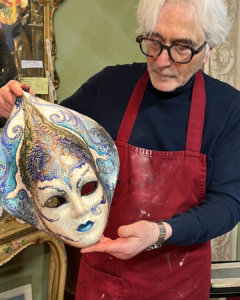
In nearby Palazzolo Acreide, I watched a family of sculptors creating and painting the iconic Sicilian Moorish Heads (Teste di Moro), pinecones, and balcony supports, all of which were done using methods that have been passed down for generations. This was a family affair, and it was an incredible thing to witness firsthand.
Their works and town have provided the backdrop for some of the most iconic fashion brands in Italy. I was not allowed to photograph most of the Moorish Heads that were on display since they were commissioned pieces and copyright protected.

What to Eat and Drink in Southeast Sicily
Sicily’s roots are based in many different cultures, and the cuisine today still reflects this. There’s lots of eggplant used in Sicilian cuisine, along with other staples like freshly made pasta and cheeses, and seafood such as sardines, tuna, and octopus.
Sicilian wines are among the best in Europe, with Nero d’Avola grapes being used to provide a wide variety of red wines. Grapes that grow in the volcanic soil of Mt. Etna also have a character all their own. If you’re a wine lover, a visit to a vineyard or two on Etna should absolutely be in your Sicily itinerary.
In addition to its famous grapes, the town of Avola is also a main source of almonds in Italy. I visited the very specific Museo della Mandorla di Avola (the Avola Almond Museum) and saw multiple varieties of almond trees, a machine that was at least 100 years old that still shelled almonds, and sampled many of the products made onsite, including an almond-based rum. A visit to the nearby Tenuta Palmeri winery was a fantastic way to taste and buy local wines in a beautiful setting.

Another delight that Sicily is famous for are arancini (or arancine, depending on where you are in Sicily—a heated debate I’m not going to contribute to). Arancini are rice balls, but in eastern Sicily, they’re cone-shaped (instead of ball-shaped) to resemble Mt. Etna.
The rice is cooked with saffron and then mixed with caciocavallo or a similar cheese. The rice is then formed into either a ball or a cone and filled with a small amount of ground beef (sometimes with peas) before the entire thing is breaded and fried.
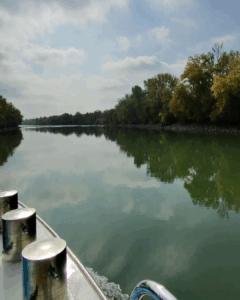
I enjoyed my first arancina in Sicily on a sailboat in the Bay of Siracusa; la dolce vita at its finest.

Best Sicilian Desserts: Cannoli, Granita, and More
For some of the best cannoli in Sicily, I went to Cannolo Terapia (Cannolo Therapy) in Siracusa. Before having my first cannolo (“cannoli” is plural), I got to watch the cannoli master at work.
First, he filled the shell with lightly sweetened fresh ricotta cheese. Then, he dipped one end in chopped pistachios and garnished it with a candied orange peel; the other end was dipped in chopped peanuts and topped with a cherry. Finally, each one was covered with powdered sugar and a sprinkle of cinnamon before being served.

Another treat that Sicily is famous for is granita, a delicious frozen fruit dish that you can have any time of the day, even for breakfast. It’s similar to sorbetto but isn’t as smooth and has an icier texture. Don’t skip out on this one!
An Unmissable Local Experience: Lunch at a Sicilian Watermill
We pulled over on a road in the Sicilian countryside and walked down a long and winding path with some stone steps in what felt like a forest. This afternoon’s visit was to Mulino ad Acqua “Santa Lucia,” a watermill (and a unique place to stay) in Palazzolo Acreide where fresh grain is ground using the ancient method created by the Egyptians. I spent some time enjoying the grounds and even got to taste an incredibly tasty persimmon directly from the tree.
Walking around the grounds, I was suddenly reminded of my elite status in the mosquito community and started to get eaten alive. Our host saw me swatting away as they feasted on my arms and ankles and motioned for me to follow him inside. He then pulled out a small vial of something, put a dab of it on my wrists, and instructed me to spread it around.
That vial was full of locally sourced Sicilian lavender extract, and the mosquitoes were off me almost immediately. Yes, I bought a vial and wish I had bought more.
Seeing the watermill in action was fascinating. Our host opened a valve that allowed water to begin flowing. The current of the water made an enormous stone wheel rotate, which crushed the grain to create fresh, preservative-free flour.
After watching the flour get made, I joined our hosts for a homemade lunch, which we ate outdoors with their donkey, Teresa, doing everything in her power to make friends and maybe sneak some food from the table.

Lunch consisted of two types of freshly made bread using grain from their mill, the most fantastic cheese plate I’ve ever seen (we ate ricotta that was made that morning at a dairy up the road), a variety of charcuterie, and freshly made eggplant parmigiana, which was not the baked mozzarella cheese pull that you’re probably thinking of.
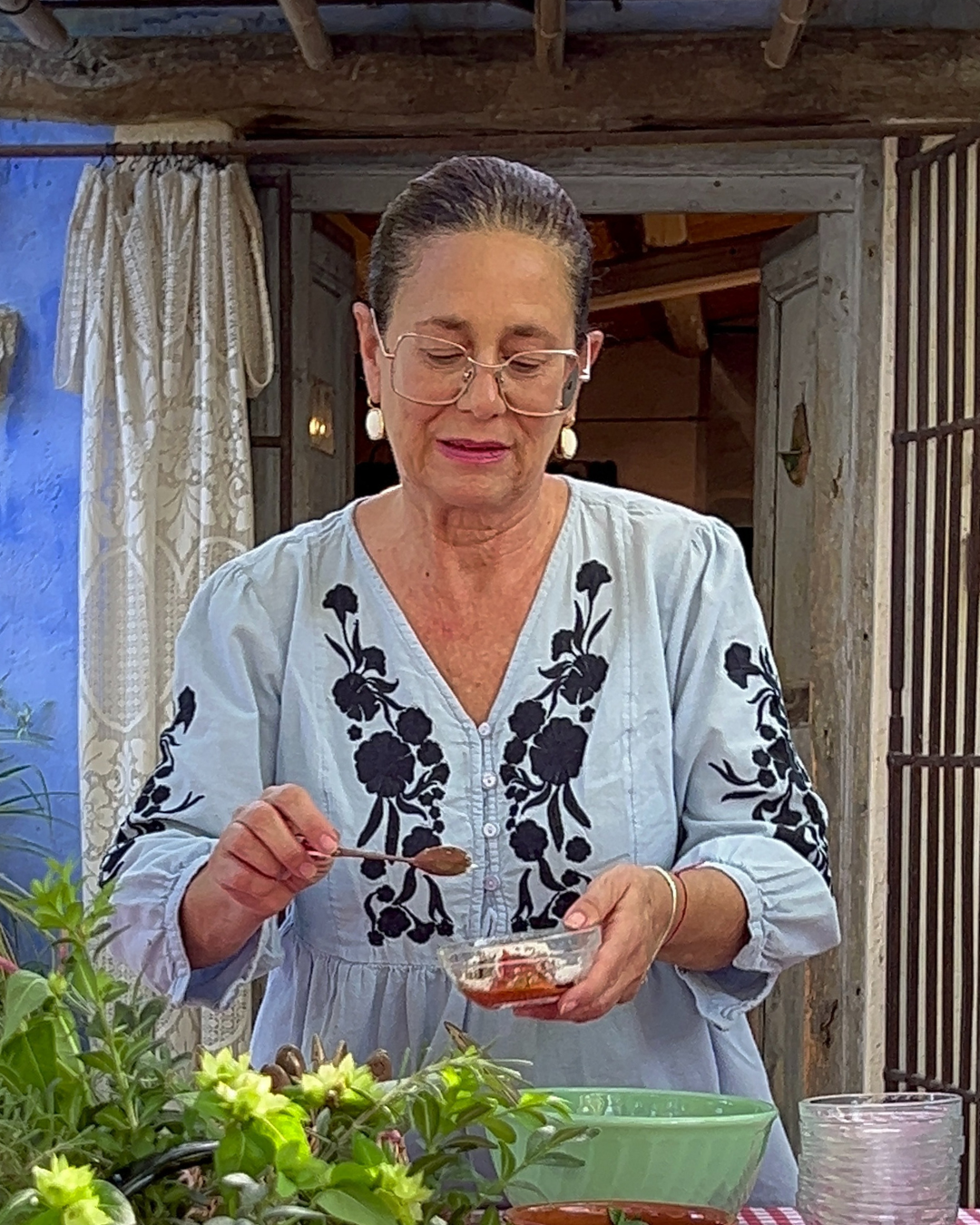
The eggplant had been cubed, fried, and placed in a large bowl that was brought to the table. Each serving bowl got a spoonful of eggplant and was layered with freshly made marinara sauce, grated Parmigiano Reggiano cheese, and garnished with fresh basil. Rather than being baked and served piping hot, Sicilian eggplant parmigiana is served warm or at room temperature.
For dessert, I sampled some homemade limoncello (honestly, this could’ve been the main attraction) and a local dish called biancomangiare, which I had never heard of before.
Biancomangiare is a beautiful and delicious almond-based pudding that is made with almond milk and lemon zest, topped with chopped pistachios and cinnamon, and served on a lemon leaf.
I am not exaggerating when I say that one of the guests at lunch ugly cried while she hugged our hostess and said goodbye, promising that she would be back.

Which Towns to Visit in Southeast Sicily
In addition to Siracusa, Ortigia, Avola, and Palazzolo Acreide, the baroque town of Noto should 100% be on your must-see-in-Sicily list. The architecture in Noto is unlike anything I’ve seen elsewhere in Italy, and the town and its people have a quality to them that gives off “old Italy” in many ways. The streets were alive with young locals, and I was thrilled to be a fly on the wall.

Dinner at Le Quattro Sorelle Palmeri Tenuta was a fantastic way to spend an evening in Noto, and the food and wine were just beyond. If you don’t have time to visit Tenuta Palmeri winery, this restaurant is an excellent place to try their production.
On the hotel front, I am very excited to see what our partners at Rocco Forte do with Palazzo Castelluccio, which is scheduled to open in 2026, joining Villa Igiea in Palermo and Verdura Resort in Sciacca as Rocco Forte’s third hotel in Sicily.
One of my big takeaways from this visit is that Sicily is a destination all its own. Sure, you can include a stop in Sicily on a trip to Italy’s mainland, but there is so much Sicily to take in that you should absolutely make Sicily the star of its own vacation.

The next time I’m in southeastern Sicily, I plan to check out Ragusa and Scicli as well. My next trip to Sicily can’t come soon enough.
Siracusa & Southeast Sicily Travel FAQs
Is Siracusa a good base for southeast Sicily?
Yes. Siracusa (especially Ortigia) is an excellent base for exploring Noto, Avola, Palazzolo Acreide, and other Baroque towns while keeping dining and hotel quality high.
How many days do you need in Siracusa and Ortigia?
For a first visit, plan at least 3 nights to enjoy Ortigia at a relaxed pace and still include day trips.
Do you need a car in southeast Sicily?
Not necessarily. For luxury travelers, private drivers make Sicily far more enjoyable. No parking stress, no ZTL confusion, and easier wine days.
What are the best towns to visit in southeast Sicily?
Top picks include Siracusa/Ortigia, Noto, Avola, and Palazzolo Acreide. If you have more time, Ragusa and Scicli are excellent additions.
What foods should you try in southeast Sicily?
Arancini/arancine, fresh seafood, eggplant-forward dishes, and local almonds from Avola are standouts. Save room for cannoli and granita.
Where can you find the best cannoli in Siracusa?
Many travelers love Cannolo Terapia in Siracusa for freshly filled cannoli with classic Sicilian garnishes.
Is Sicily worth its own trip, or should it be an add-on to mainland Italy?
Sicily deserves its own trip. There’s enough culture, cuisine, and variety to make it the star of a dedicated itinerary.